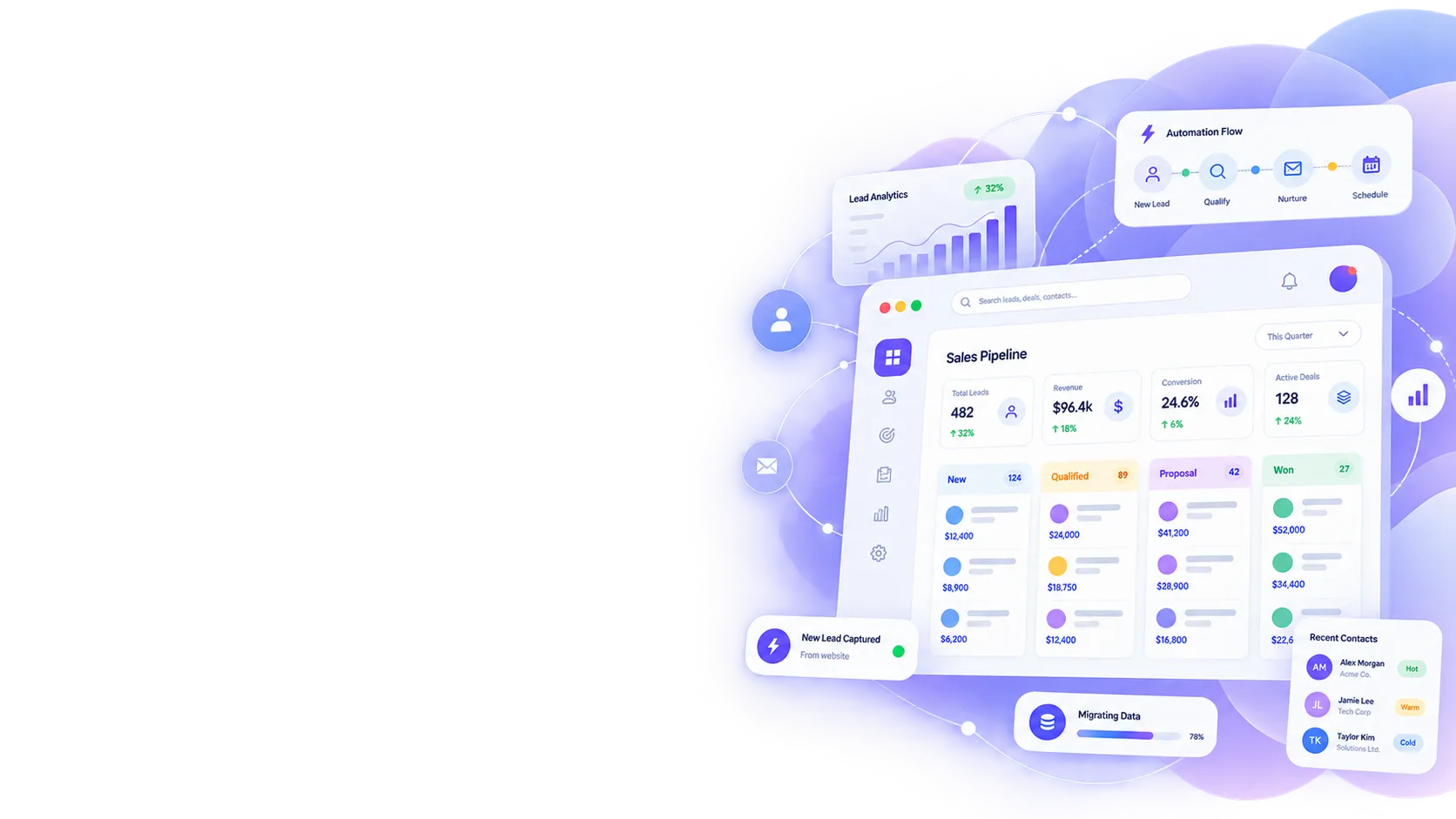
Custom CRM Development for Logistics
Logistics and transportation companies run on timing, and timing breaks down fast when dispatch, fleet status, and client updates live in separate spreadsheets and group chats. We build CRMs and internal tools that give your team one place to track loads, drivers, and client communication — so dispatchers spend less time chasing information and more time keeping things moving.
Book Free ConsultationCommon Challenges in Logistics
The problems a generic CRM doesn't solve — and why they keep coming back.
Dispatch Runs on Spreadsheets
Load assignments, driver availability, and delivery windows are tracked manually, which means mistakes and double-bookings.
Client Updates Are Manual
Customers call in for status updates because there's no automated way to notify them, which pulls staff off other work.
No Central View of Operations
Fleet status, client accounts, and billing sit in different systems that don't talk to each other.
How a Custom CRM Solves This
Common CRM needs we build for logistics businesses.
- 01
A single dashboard for loads, drivers, and delivery status
- 02
Automated client notifications tied to real shipment status
- 03
Workflow automation for dispatch, scheduling, and billing handoffs
- 04
Reporting on fleet utilization and on-time performance
What We Build for Logistics Businesses
A subset of the modules and features we tailor to your workflow.
Dispatch & Scheduling
Assign loads and manage driver schedules from one screen, with visibility into availability and conflicts.
Client & Account Management
Track client accounts, contracts, and communication history alongside active and past shipments.
Automated Status Updates
Trigger client notifications automatically as shipment status changes, cutting down on inbound status calls.
See Results for Logistics Businesses
Explore how we've approached CRM builds for businesses like yours in our case studies.

Questions From Logistics Businesses
Yes — we connect to the tracking and telematics systems already in place rather than replacing your hardware investment.
Generic CRMs are built around sales pipelines, not dispatch and delivery workflows. We build around how loads actually move through your operation.
Yes, the system is built to handle more drivers, routes, and clients without a rebuild.
Ready for a CRM Built for Logistics?
Tell us how your team works — we'll show you what a tailored CRM would actually look like.
- Call us+1 (909) 348-1249
- Email usinfo@nexgendesigners.com
- No pressure30-min call / no obligation