CRM Features Small Businesses Actually Need (and Which Ones Are Hype)

The short answer
Small businesses get the most value from four CRM capabilities: a simple pipeline view, automated follow-up reminders, one or two key integrations (usually email and calendar), and basic reporting. Features like AI lead scoring, complex territory management, or advanced forecasting rarely justify their cost or setup time for teams under 20 people.
The Features Worth Prioritizing
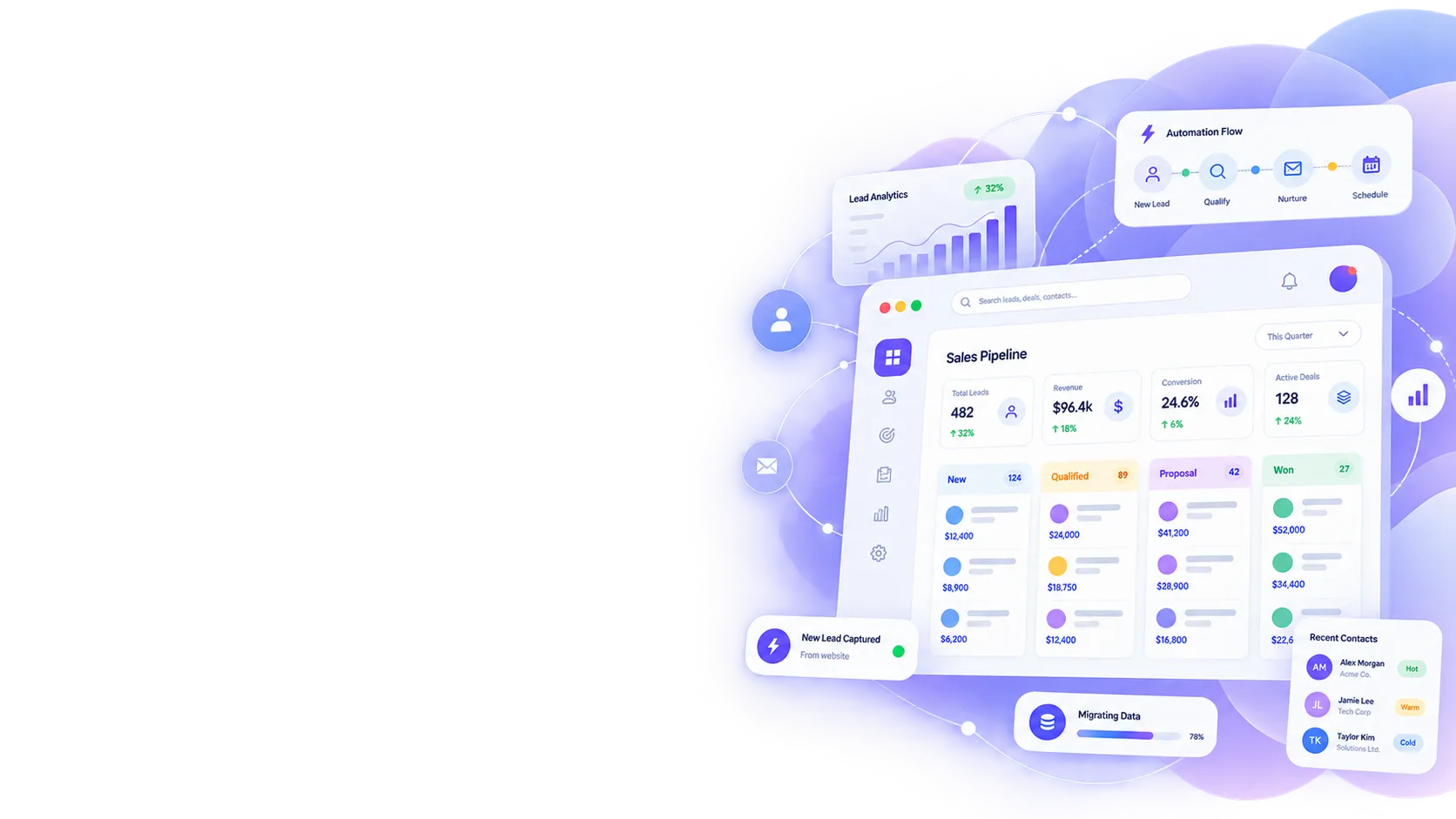
- A clear pipeline view — seeing every deal and its stage at a glance is the single highest-value feature a CRM provides.
- Automated follow-up reminders — the fix for the #1 spreadsheet failure mode: forgotten leads.
- Email and calendar integration — logging communication automatically instead of manually copy-pasting.
- Basic reporting — deal counts by stage, simple conversion rates, and activity per rep.
- Custom fields — the ability to track the 2-3 pieces of information that are actually specific to your business.
The Features That Are Usually Hype for Small Teams
- AI lead scoring — needs a large volume of historical data to be accurate; most small businesses don't generate enough deal history for it to outperform a rep's own judgment.
- Complex territory and role hierarchies — solves an organizational problem most teams under 20 people don't have yet.
- Advanced forecasting models — often overfit to add-ons; a simple stage-weighted pipeline total gets you 90% of the value.
- Built-in marketing automation suites — usually worth buying separately (or building lightly) rather than paying a CRM premium for a half-featured version.
Why This Matters for Cost
Every feature you scope into a CRM — whether you're buying a platform tier or building custom — has a cost, either in licensing fees or development time. The businesses that get the best return on their CRM investment are the ones that resist scope creep and build around the handful of features their team will actually use daily, then add more only once those are proven out.
Nexgen Designers Team
CRM & Software Development at Nexgen Designers
Keep reading

Ready to talk about your project?
Tell us what you are trying to build or fix. If we are the right fit, we will say so.
- Call us+1 (909) 348-1249
- Email usinfo@nexgendesigners.com
- No pressure30-min call / no obligation